RSS

Friday, October 16, 2009

COURSEWORK OPTIONS


2. A promotion package for a new film, to include a teaser trailer, together with two of the following three options:


  • a website homepage for the film; [disregard this option]
  • a film magazine front cover, featuring the film;
  • a poster for the film.

10. A short film in its entirety, lasting approximately five minutes, which may be live action or animated or a combination of both, together with two of the following three options:

  • a poster for the film;
  • a radio trailer for the film;
  • a film magazine review page featuring the film.

My group has chosen to do the latter, a Short Film as we feel that we could produce a much better piece in this medium rather than a Film trailer. A Film trailer is a short montage of clips that are important to the plot
of the fim the trailers for. Normally these shots involve lots of special effects that will be hard to reproduce at our current level and also due to a lack of necessary equipment. Plus we would have to think up a good plot for a whole film otherwise the piece would not be strong and would not draw the audience into the film and make them want to see more.
Whereas we think that we can put a lot more thought and emotion into creating a short film with an interesting storyline which will gain us a good mark in the unit of work but also ultimately something that people will enjoy to watch.
Also after attending a 'How to make a Movie Trailer' workshop at The Coop Young Filmmakers Festival i decided that it wasnt really for me.

ASSESSMENT CRITERIA

Research and Planning must be presented in electronic format. Where candidates have worked as a group, the research may be presented collectively, but teachers are asked to differentiate the contributions of individuals within the group in arriving at a mark and justifying individual marks on the assessment sheet. As part of the moderation sample, the moderator will request some research/planning material.


Level 1 0–7 marks
There is minimal research into similar products and a potential target audience.

There is minimal organisation of actors, locations, costumes or props.

There is minimal work on shotlists, layouts, drafting, scripting or storyboarding.

Time management may be very poor.

There is minimal care in the presentation of the research and planning.

There is minimal skill in the use of digital technology or ICT in the presentation.

There are minimal communication skills.


Level 2 8–11 marks
There is basic research into similar products and a potential target audience.

There is basic organisation of actors, locations, costumes or props.

There is basic work on shotlists, layouts, drafting, scripting or storyboarding.

Time management may not be good.

There is a basic level of care in the presentation of the research and planning.

There is basic skill in the use of digital technology or ICT in the presentation.

There are basic communication skills.


Level 3 12–15 marks
There is proficient research into similar products and a potential target audience.

There is proficient organisation of actors, locations, costumes or props.

There is proficient work on shotlists, layouts, drafting, scripting or storyboarding.

Time management is good.

There is a good level of care in the presentation of the research and planning.

There is proficient skill in the use of digital technology or ICT in the presentation.

There are proficient communication skills.


Level 4 16–20 marks
There is excellent research into similar products and a potential target audience.

There is excellent organisation of actors, locations, costumes or props.

There is excellent work on shotlists, layouts, drafting, scripting or storyboarding.

Time management is excellent.

There is an excellent level of care in the presentation of the research and planning.

There is excellent skill in the use of digital technology or ICT in the presentation.

There are excellent communication skills.


Candidates will evaluate their work electronically. The format of the evaluation has some flexibility and its form can be negotiated between teacher and student: it may take place with individual candidates or with the production group as a whole, or each individual candidate or production group may make a formal or informal presentation to the whole class.


The questions that must be addressed in the evaluation are:

In what ways does your media product use, develop or challenge forms and conventions of real media products?

How effective is the combination of your main product and ancillary texts?

What have you learned from your audience feedback?

How did you use new media technologies in the construction and research, planning and evaluation stages?

Ideas for the format for the presentation of the evaluation can be found in the Guidance Notes.


Level 1 0–7 marks
There is minimal understanding of the forms and conventions used in the productions.

There is minimal understanding of the role and use of new media in various stages of the production.

There is minimal understanding of the combination of main product and ancillary texts.

There is minimal understanding of the significance of audience feedback.

There is minimal skill in choice of form in which to present the evaluation.

There is minimal ability to communicate.

There is minimal use of digital technology or ICT in the evaluation.


Level 2 8–11 marks
There is basic understanding of the forms and conventions used in the productions.

There is basic understanding of the role and use of new media in various stages of the production.

There is basic understanding of the combination of main product and ancillary texts.

There is basic understanding of the significance of audience feedback.
There is basic skill in choice of form in which to present the evaluation.
There is basic ability to communicate.

There is basic use of digital technology or ICT in the evaluation.


Level 3 12–15 marks
There is proficient understanding of the forms and conventions used in the productions.

There is proficient understanding of the role and use of new media in various stages of the production.

There is proficient understanding of the combination of main product and ancillary texts.

There is proficient understanding of the significance of audience feedback.

There is proficient skill in choice of form in which to present the evaluation.

There is proficient ability to communicate.

There is proficient use of digital technology or ICT in the evaluation.


Level 4 16–20 marks
There is excellent understanding of the forms and conventions used in the productions.

There is excellent understanding of the role and use of new media in various stages of the production.

There is excellent understanding of the combination of main product and ancillary texts.
There is excellent understanding of the significance of audience feedback.

There is excellent skill in choice of form in which to present the evaluation.
There is excellent ability to communicate.

There is excellent use of digital technology or ICT in the evaluation.

Monday, October 12, 2009

FINAL CUT

ANCILLARY TEXT FINAL PRODUCT (2)


all pictures used here were taken by ourselves.

ANCILLARY TEXT FINAL PRODUCT (1)


EDITING & POST-PRODUCTION NOTES

Now that we've collected all of our footage and cut it into the correct order we can start using Final Cut Express to edit in the transitions and soundtrack. The Final Cut Express program is quite hard to use for beginners but luckily we attended a Final Cut Masterclass workshop which gave us all the basic knowledge we needed to edit a film. We will still be using google to search for more advanced tutorials just so we can make our film that little bit better.


Sound of a Crow:
When the central protagonist is at the camp-site and as he is about to pick up the dead body by the farmhouse, he hears the sound of a crow which distracts him from what he was doing and makes him run away. I have been searching the Internet and have managed to find a website which gives away free sound effects that are also copyright-free. (http://www.ilovewavs.com/Effects/Birds/Birds.htm)
I then just need to import the sound clip into Final Cut and add it over the clip where the central protagonist looks up. I may need to cut down the clip a little as it lasts about 10 seconds, and this is far too long.


Lighting Adjustments:
After filming we noticed that some shots were lighter/darker than others. This was due to the fact that we filmed at slightly different times of the day each time and at this time of the year it starts to get dark earlier. This is not much of a problem though we feel as we can use the Final Cut Express program to alter the lighting to make the shots match and look coherent. We have also found an online tutorial to guide us on how to do this so it should be simple.


Voice over:
In our Final Cut we decided that it needs a voiceover of a news report to help anchor our preffered reading. We'll record the news reports ourselves using the equipment provided then overlay the track ontop of our soundtrack and move it to the correct positions. Hopefully this will help the audience to understand the plot easier. 

ANCILLARY TEXT IDEAS & RESEARCH (2)

Film Magazine Review Page
For the second Ancillary text we will be doing a Film magazine review page for our Short Film.
To do this we will be conducting some research on film magazines and noting how the Professionals have designed their articles and what content they have included. We will then use this information collected to  make our own magazine review page.

I have decided to study three popular Film Magazines and combine all of the good things from these then apply it to our Film Magazine review page. Hopefully this will help to make it a good quality piece.

Research
Empire Magazine
Empire is a British film magazine published monthly by Bauer Consumer Media. From the first issue in July 1989, the magazine was edited by Barry McIlheney and published by Emap. Bauer purchased Emap Consumer Media in early 2008. It is the biggest selling film magazine in Britain, consistently outselling its nearest market rival Total Film and is also published in Australia, Turkey and Russia.

(An Example of an Empire magazine article)

Features of an Empire magazine article:

  • A Big picture
  • Brief Synopsis/Technical Details
  • One Big Quote
  • Final Verdict at the end 
  • Star Rating
Feature articles have no borders but do have titles and page numbers. Less important articles have Borders.
All the pages are visually pleasing as there is lots to see, for instance different colour writing in different sizes with different fonts are used to bring life to the page. The big picture or lots of small pictures used helps with this too.

(An Example of an Empire magazine Article)
Overall there is lots of colour and it was interesting to read.


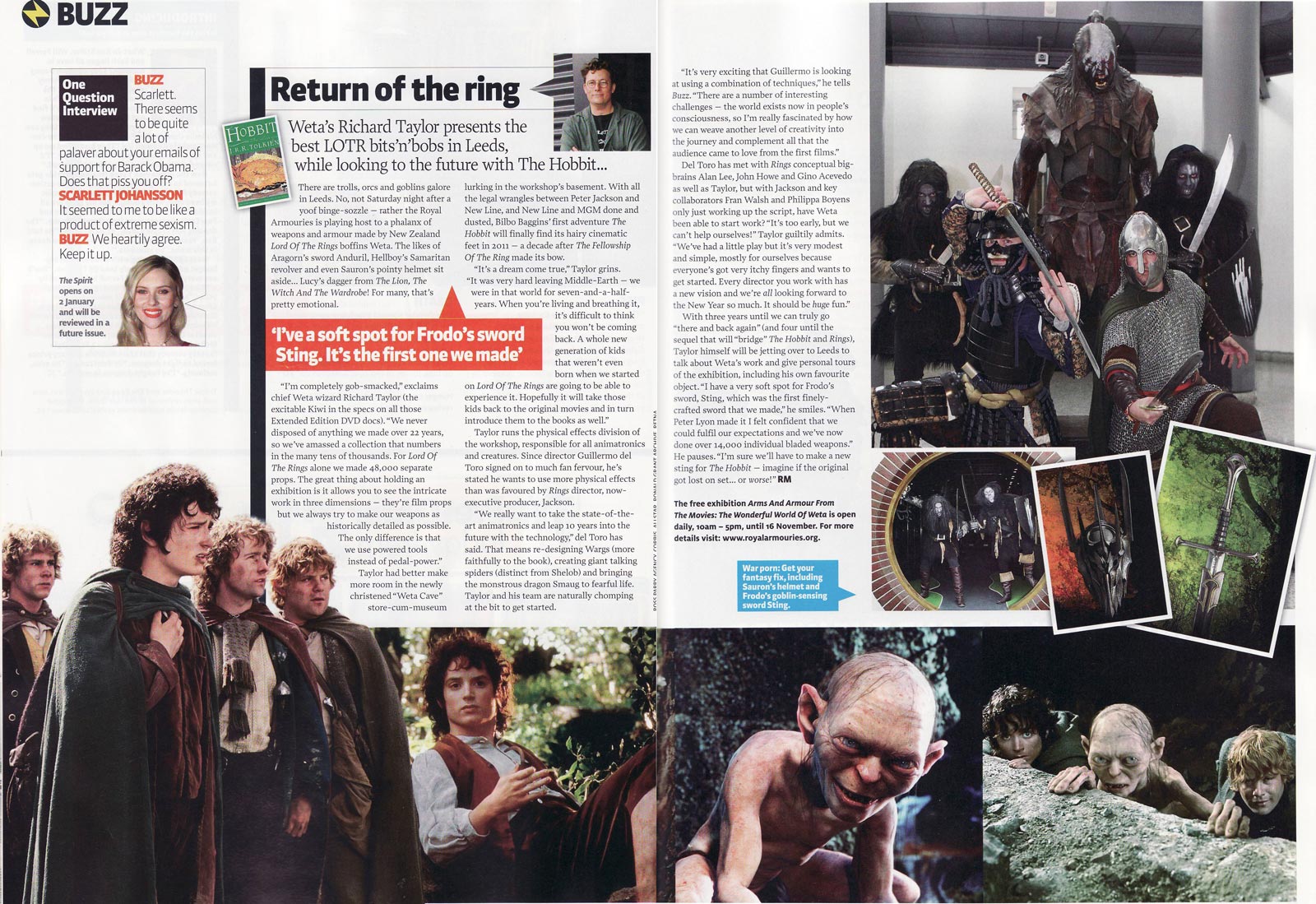
Total Film
Total Film, published by Future Publishing, is the United Kingdom's second best-selling film magazine. It offers film and DVD news, reviews, and features. The magazine was launched in 1997 and is published every four weeks. TF provides a range of features, from full-length interviews, with established and up-and-coming actors and directors, to major film previews.

(An example of a Total Film Magazine article)
Features of a Total Film Magazine:
  • One quite smal picture
  • Title in Bold
  • Star rating
  • Release Date
  • Sentence that sums up movie in bold
  • Small review of film
  • Author of review in bold
  • Certificate rating
  • Running time
The articles are mostly a white background with black writing, the only colour really brought to the page is from the picture.

(An example of a Total Film Magazine article)
Occasionaly there is a full page picture with writing on top of it which i thought were good as normally these pictures are interesting and you can study the details more closely.
No borders are used really in any of their articles.

Filmstar
Filmstar is a British magazine devoted to films. Launched on 28 May 2009, Filmstar is the second magazine launched by Blackfish Publishing. It was published monthly and aimed at movie-goers aged 25 and over. Filmstar ended in October 2009 with issue 5.

(An example of a Filmstar Magazine article)
Features of a Filmstar Magazine article:
  • One medium sized picture
  • Name of Directors, Writers and Stars of the film alltogether
  • Star Rating
  • Certificate , Release date and Running Time alltogether
  • Sentence that sums up film
  • Positives and Negatives plus Brief Synopsis
  • Small fact about the movie in a box in the middle shaped like a post-it note.
  • Bold writing at starts of paragraphs
  • A black line border is used with the title of the section intergrated

(An example of a Filmstar Magazine article)
I felt that this Magazine did everything that a Film magazine should but was the least interesting out of them all which may have been why they stopped producing it.

I also decided to ask some people which magazine appealed to them the most out of the three. The majority said that they prefered the Empire Magazine as it was more Visually Appealing and the articles were more interesting to read compared to the other two magazines so i will keep this in mind when designing the magazine review page.

Summary
After studying these magazines i have come up with a list of techniques we will apply to our magazine review page:
  • We will use quite a large picture somewhere on the page to interest the audience
  • The title should be Large and in bold but also maybe white/black in a coloured box
  • Then a little sentence/synopsis of the movie, again, possibly in a coloured box with white/black writing underneath the title.
  • Synopsis of the film, good points, bad points and overall opinion.
  • Name of directors, writers, certificate rating and release date in a box somewhere on the page
  • Star Rating, this could be close to the directors box(see above bullet point)
  • The Crucial thing is to keep the page looking interesting and visually pleasing so it doesnt bore the audience.